
WATER-USE EFFECIENCY CAMPAIGNS.
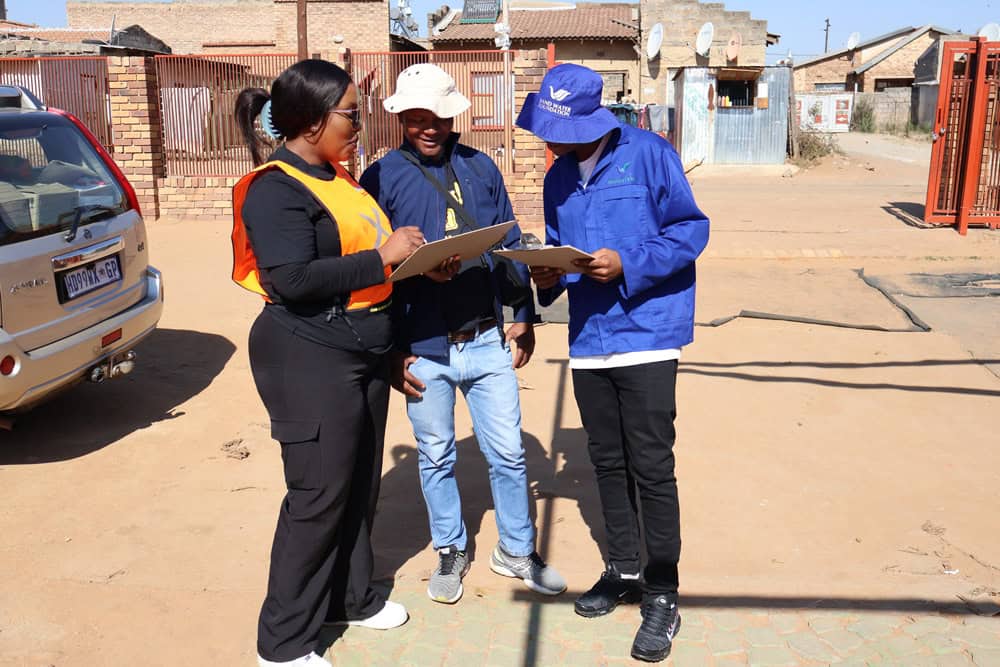
Community Education on Water Use Efficiency is one of the activities implementing Jobs Creation Optimisation Investments, a secondary activity of Rand Water Foundation WASH Plus Strategy 2030. Water use efficiency campaigns were undertaken in collaboration with the with Johannesburg Water (JW) rolled out in a diverse urban landscape including Naledi, Crosby, Wilgespruit, Marikana, Cosmo City, Doornkop, Dobsonville, Protea Glen Extension 16, Orlando West, and Diepkloof. As a result, one hundred and seventy-three (173) job opportunities were created, and approximately forty-eight thousand (48,000) households were reached through water-use efficiency education. Johannesburg Water supplies around 1.6 billion litres of potable water each day, largely sourced from Rand Water. Yet, more than 46% of that volume is classified as non-revenue water—meaning it’s lost through leaks, theft, or remains unbilled. In practical terms, this equates to approximately 740 million litres daily that the municipality pays for but cannot bill. Addressing this inefficiency is key to improving revenue recovery and system sustainability. One of the notable beneficiaries of the initiative, Mr. Thabo Mokoena, a resident of Diepkloof Zone 5 (Ward 27), shared his personal experience saying, “I’ve been both actively involved in and positively impacted by the Community Education on Water-Use Efficiency Project, initiated by the Rand Water Foundation. This initiative directly engaged our community — including schools, households, and public areas — to raise awareness on water conservation. Before the project, many of us, lacked basic knowledge about the importance of saving water. The careless use of water was common, driven by a lack of understanding about its scarcity and value”.
Mr. Mokoena emphasised the project’s growth and effectiveness: “Since its launch, the initiative has expanded significantly. Door to door workshops or home visits, and school-based activities have provided us with practical tools and knowledge on wise water use. By promoting effective water conservation practices, the initiative supports sustainable water use while also helping to ease the financial burden on residents — many of whom have reported a significant and noticeable reduction in their water bills.” He noted the project’s reach in Diepkloof alone had expanded from an initial 150 households to over 5,000, engaging children, parents, and elders alike. “Local youth were employed as facilitators, giving them a source of income as well as skills development opportunities. This has helped address youth unemployment while nurturing future community leaders.” “Collaboration with local ward councilors, has further strengthened the campaign’s impact.
Even those unable to attend sessions received information through community platforms. The feedback has been overwhelmingly positive — we’re seeing cleaner environments, fewer leaking taps, and increased discussions about water conservation,” said Mr. Mokoena. In his closing remarks, Mr. Mokoena stated: “The Rand Water Foundation has laid a strong foundation for long-term impact. Many of us now continue spreading water-saving practices. If local leaders and schools are continually supported, I believe these positive changes will be sustained for years to come.”