
TURNS 180 YEARS OLD
Cartoon 1
Take us back to the beginning. How did you first get into cartooning, and what led you to become an editorial cartoonist for The Witness?
I have been drawing cartoons for as long as I can remember. As a small child, I used the dirt road outside our smallholding as a canvas, producing complicated stories involving bears living in tree houses in the bottom of our garden, and other such flights of childish fantasy.
My interest really took off, however, when my parents, realising my interest in the art of humour, began giving me the Giles' Cartoon Annual as a yearly Christmas present. I was immediately hooked. I loved his gentle humour and cosy English scenes, as well as his eccentric Giles family (his formidable Grandmother, in particular). I used to copy his cartoons assiduously and learnt a lot by imitating his work although, oddly enough, I see very little evidence of it in my current style. I am still a huge admirer.
Later, I discovered the ground-breaking work of Ronald Searle, Gerald Scarfe and Ralph Steadman, three progenitors of a ferocious new wave of British visual satire, and was won over. I quickly changed to their scabrous, hard-hitting, ink-splattered style. I don't think any caricaturist can avoid being influenced by the masters of his generation, especially artists as good as these.
The two highly influential American cartoonists Pat Oliphant (he was actually born in Australia) and Jeff McNelly also had an important effect on my development.
Cartoon 2
You’ve been drawing cartoons for The Witness for over three decades now. Do you remember your very first cartoon for the paper — and what it felt like seeing your work in print?2
My arrival at the Witness in February, 1990, coincided, quite fortuitously, with two major and far-reaching historical developments – the collapse of the old Soviet Union and the end of Apartheid.
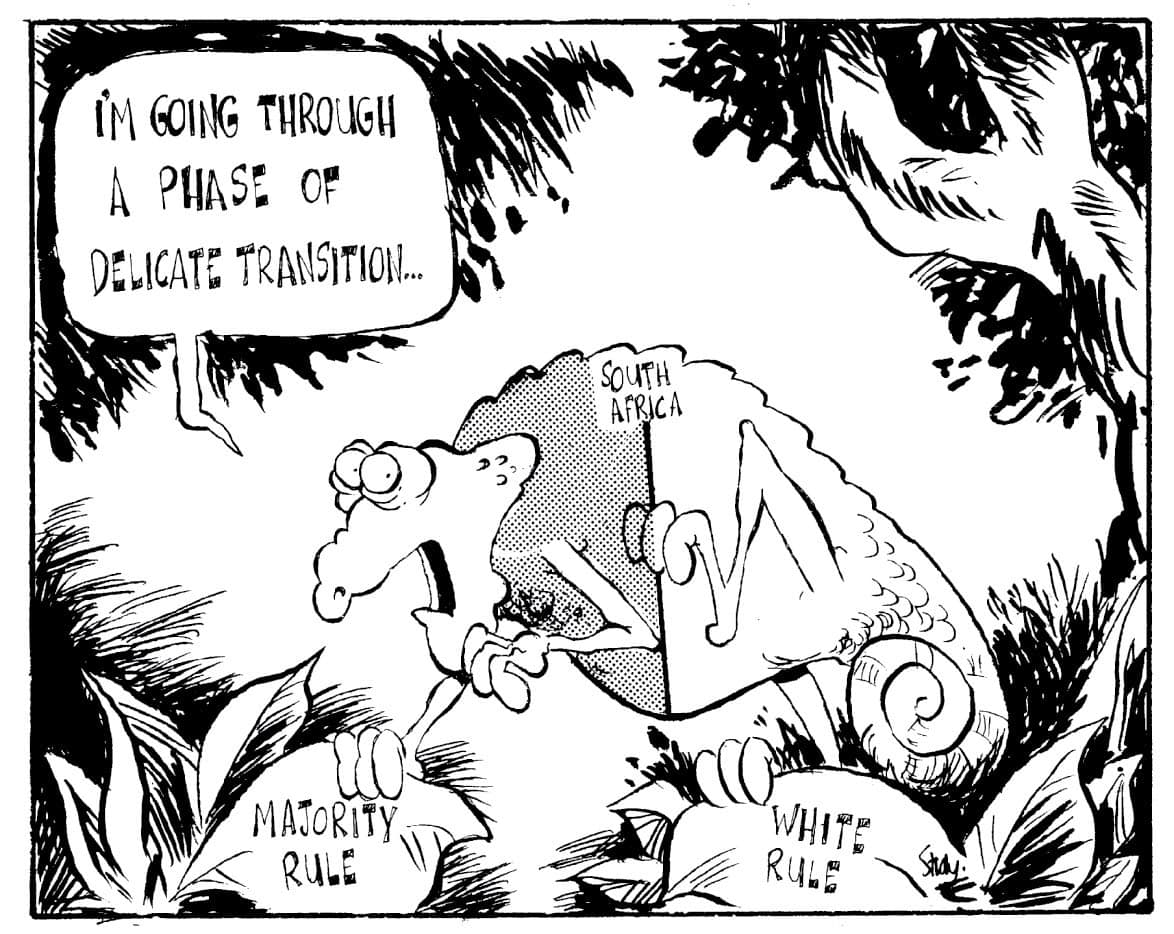
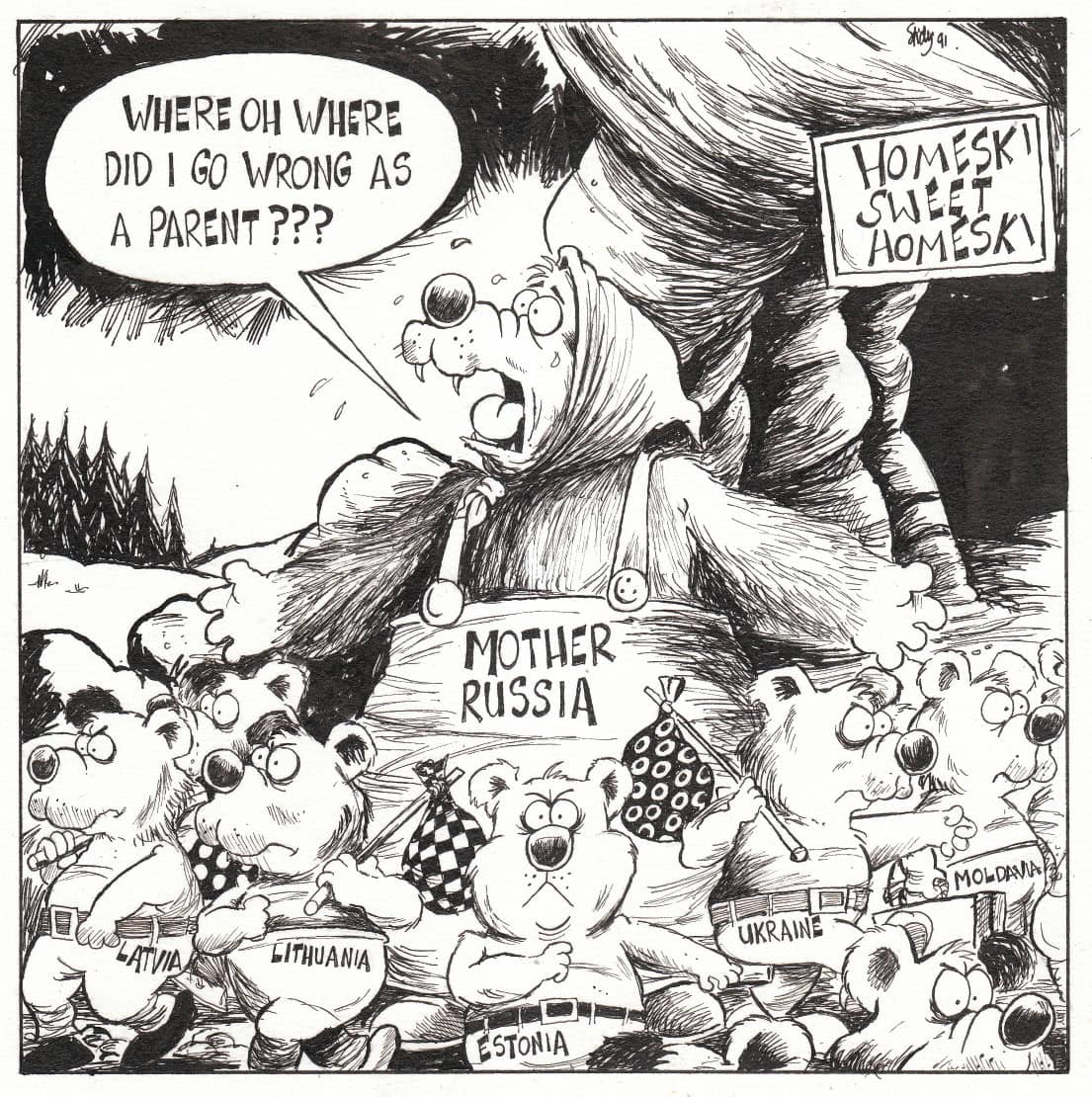
The two cartoons that stand out in my mind from those early days are the one I did of a bear (Mother Russia) being deserted by all her cubs (the Soviet satellite states) and another of a chameleon (representing South Africa) going through a state of “delicate transition” as it approached independence.
I am still proud of those two cartoons. They captured an important moment in history.
Cartoon 3
When you first started drawing cartoons, the process was very different from today, I imagine. Has the advancement of tools and technology changed the way you create your work over the years? And what elements have stayed the same?
Like my idols Searle, Scarfe and Steadman (I think the “S” in our surname must be a linking factor), I am strictly a pen and ink man.
I love the scratchy feel of a nib on paper and the way an idea, by some strange, inexplicable process, moves from brain to hand and then onto the paper's surface. Having spent my entire working life trying to develop an individual style which reflects who I am – and which readers have come to associate with me – I would be very reluctant to change now.
The job just wouldn't feel the same if I didn't have ink-stained fingers as proof of my creative efforts.
Cartoon 4
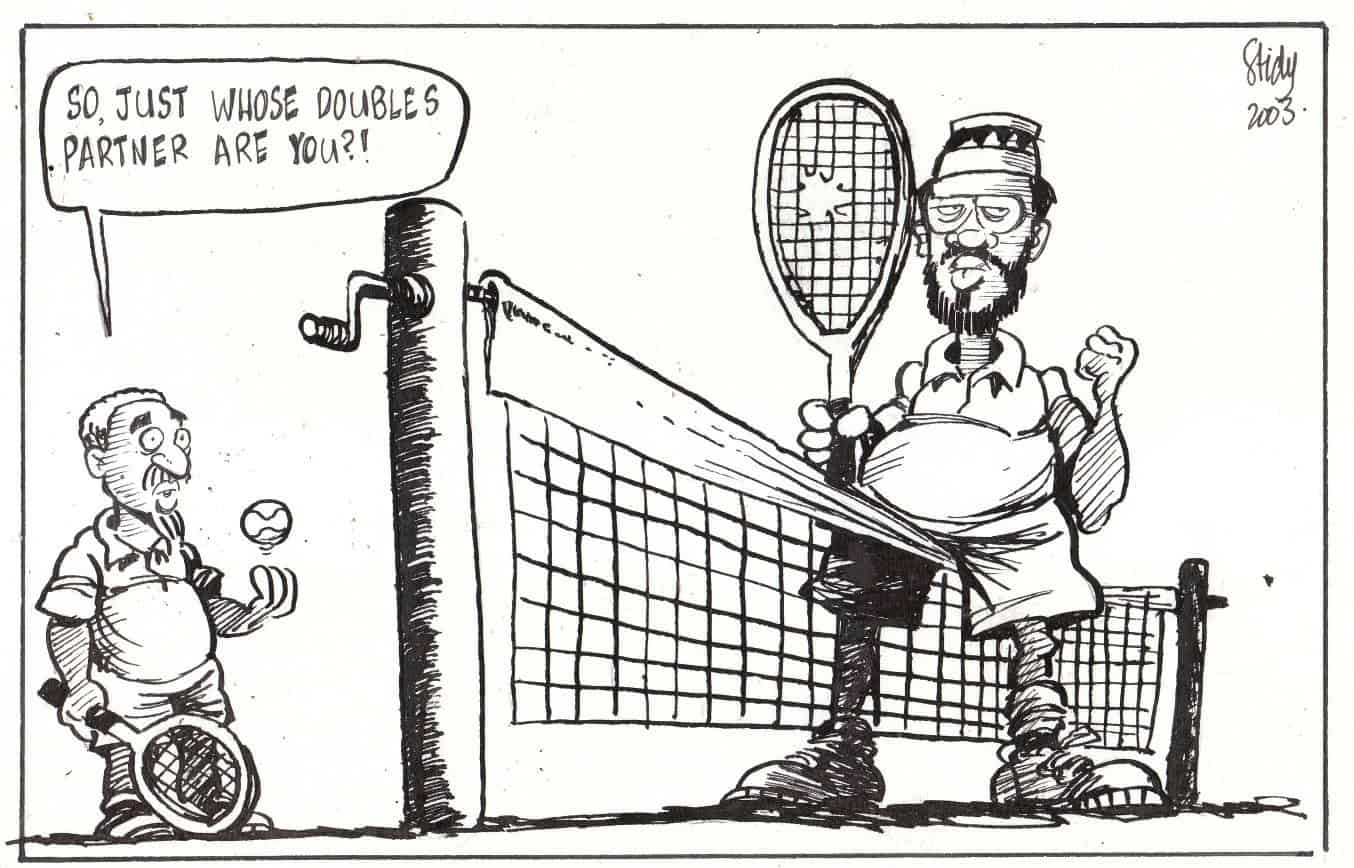
Editorial cartoons have long been described as “the sharpest opinion on the page”. How would you describe the role of a cartoonist in a newspaper?
A political cartoon is, in essence, a visual essay that sums up complicated events or situations in a few simple, sketched lines. Therein lies its power. You can convey at a glance a message that would take a newspaper article hundreds of words to say.
As Steve Bell put it, “it is Art with attitude”.
Because it is such a highly individualised art form, I think it is very important that a cartoonist remain truthful to his thoughts and feelings, draw what is inside him and hope the message he is trying to convey will strike a responsive chord in his audience.
As someone who doesn't believe in “cartoons by committee”, I have always been grateful that all the editors I have served under, from Richard Steyn to Riquadeu Jacobs, have not tried to dictate what I draw but have given me the leeway to pursue my own ideas and express my own opinions.
My best cartoons are, invariably, the ones where I feel most strongly about the subject.
Cartoon 5
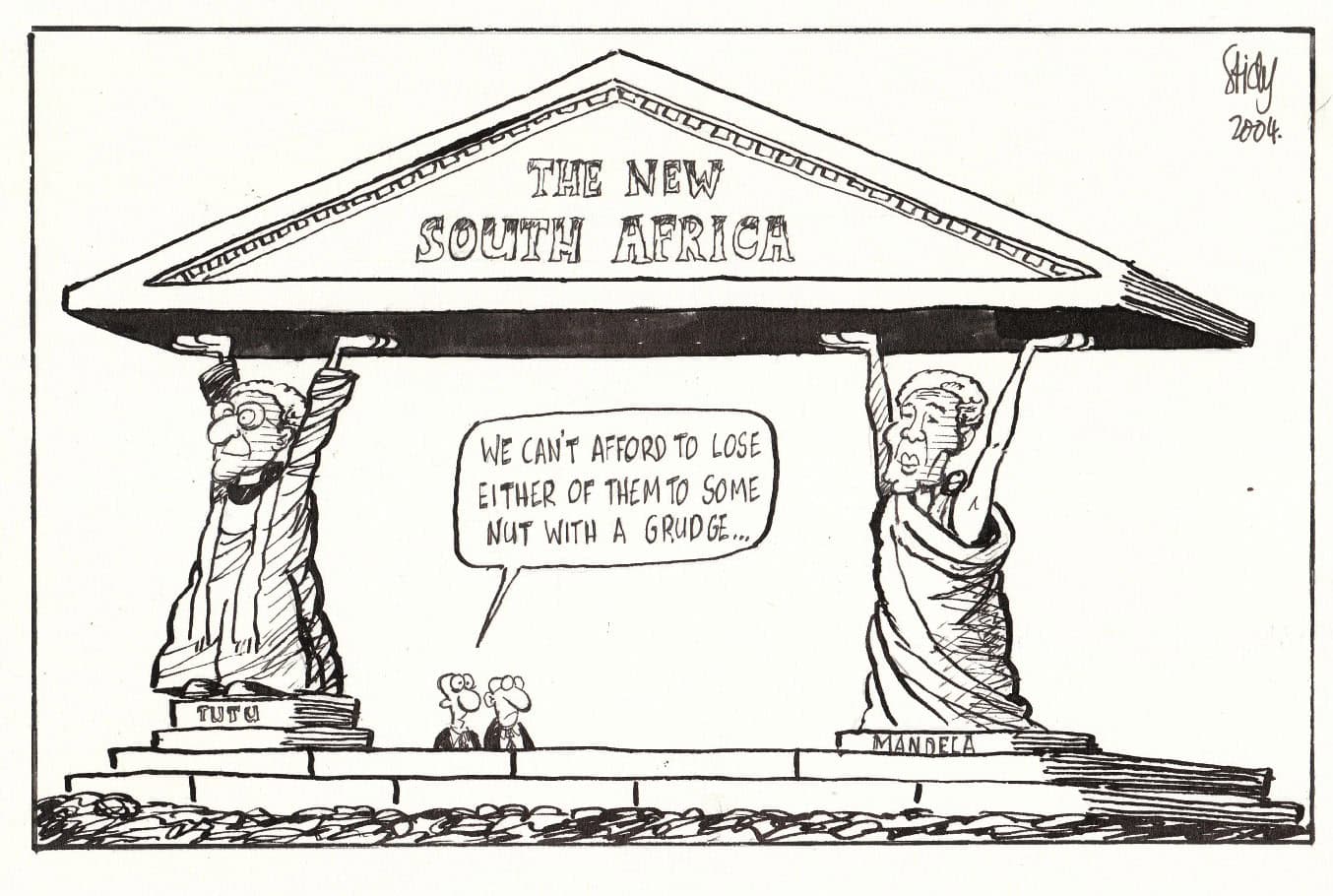
At one point you were producing a cartoon every day. What was that pace like — having to absorb the news, find the angle and translate it into humour and satire in just a few hours?
Initially, I used to produce five cartoons a week but that increased to six when News24 took over ownership of the Witness (they also expected me to write a monthly column).
Producing cartoons on a day-to-day basis can be gruelling work, especially on “slow news” days or those awful times when the ideas simply refuse to flow. Sometimes I had to settle for an inferior joke simply because I hadn't had time to tease out a better one.
As someone who takes his art very seriously, that always left me feeling depressed because no cartoonist wants to let his standards slip.
Since I semi-retired in 2015, I have been released from the tyranny of the daily deadline and now only have to produce one cartoon a week. It has been a relief. Now, I have time to think my ideas through and put more work into the actual drawing.
Cartoon 6
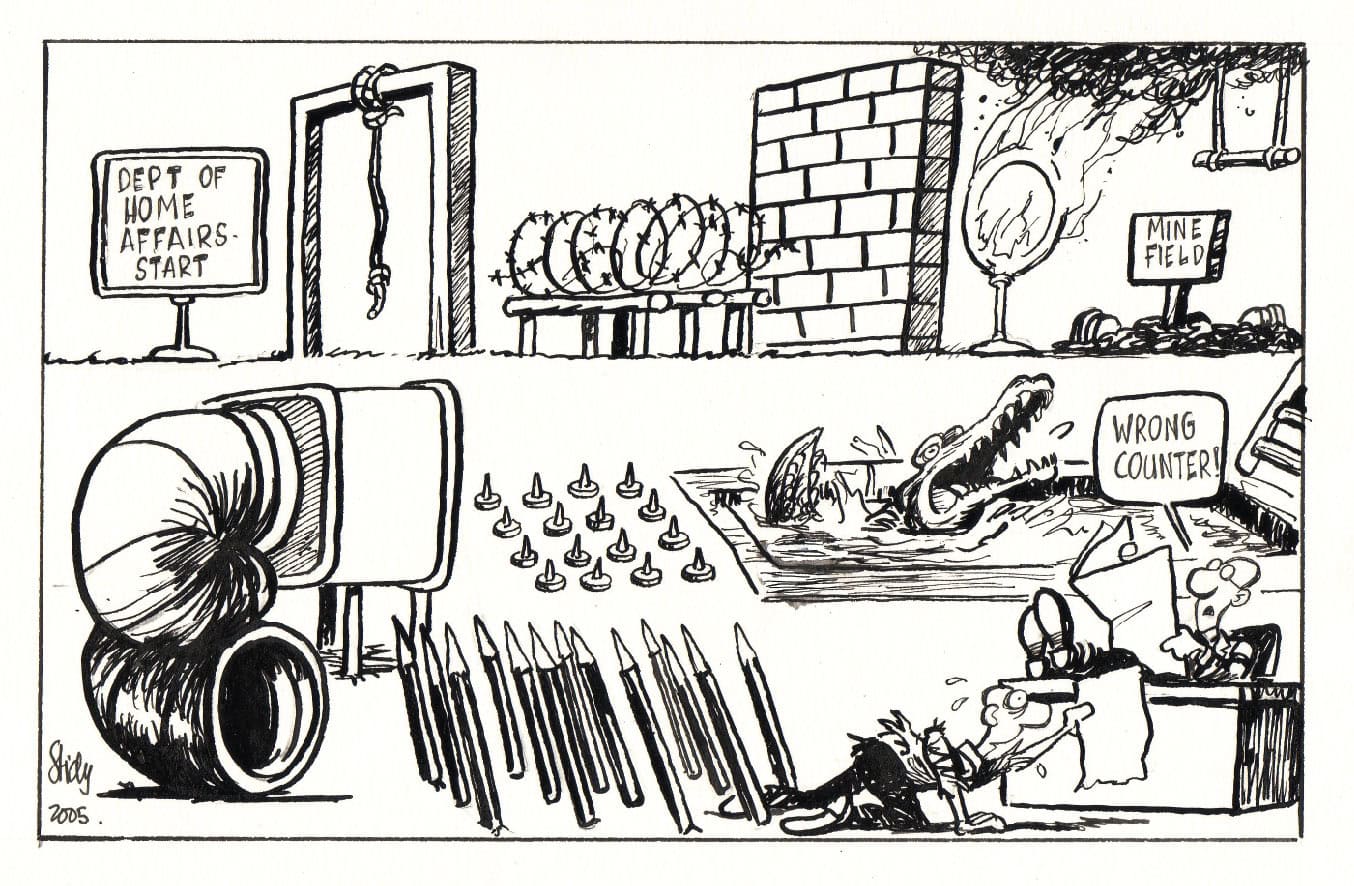
Your prompt Thursday morning calls to discuss the week’s cartoon are a fixture on our weekly diary. Walk us through the creative process from conceptualisation to final cartoon.
My morning cartoon routine has been the same for the last thirty-five years.
I get up. I make a cup of tea. I scan the news looking for the most important story of the day or, at least, the one that most readily lends itself to some form of humorous illustration.
Then comes the difficult part – finding an angle. Occasionally, inspiration strikes in a blinding flash. For the most part, though, you’ve got to coax, cajole and caress the idea out of its hiding place.
Once you have the idea, you've got to get it down on paper. I always sketch my drawings in pencil first until I am satisfied. Then I trace over onto better quality paper with pencil and ink using dip pens, technical pens, fine liners and brush. Lately, I have started to add a dash of colour.
Cartoon 7
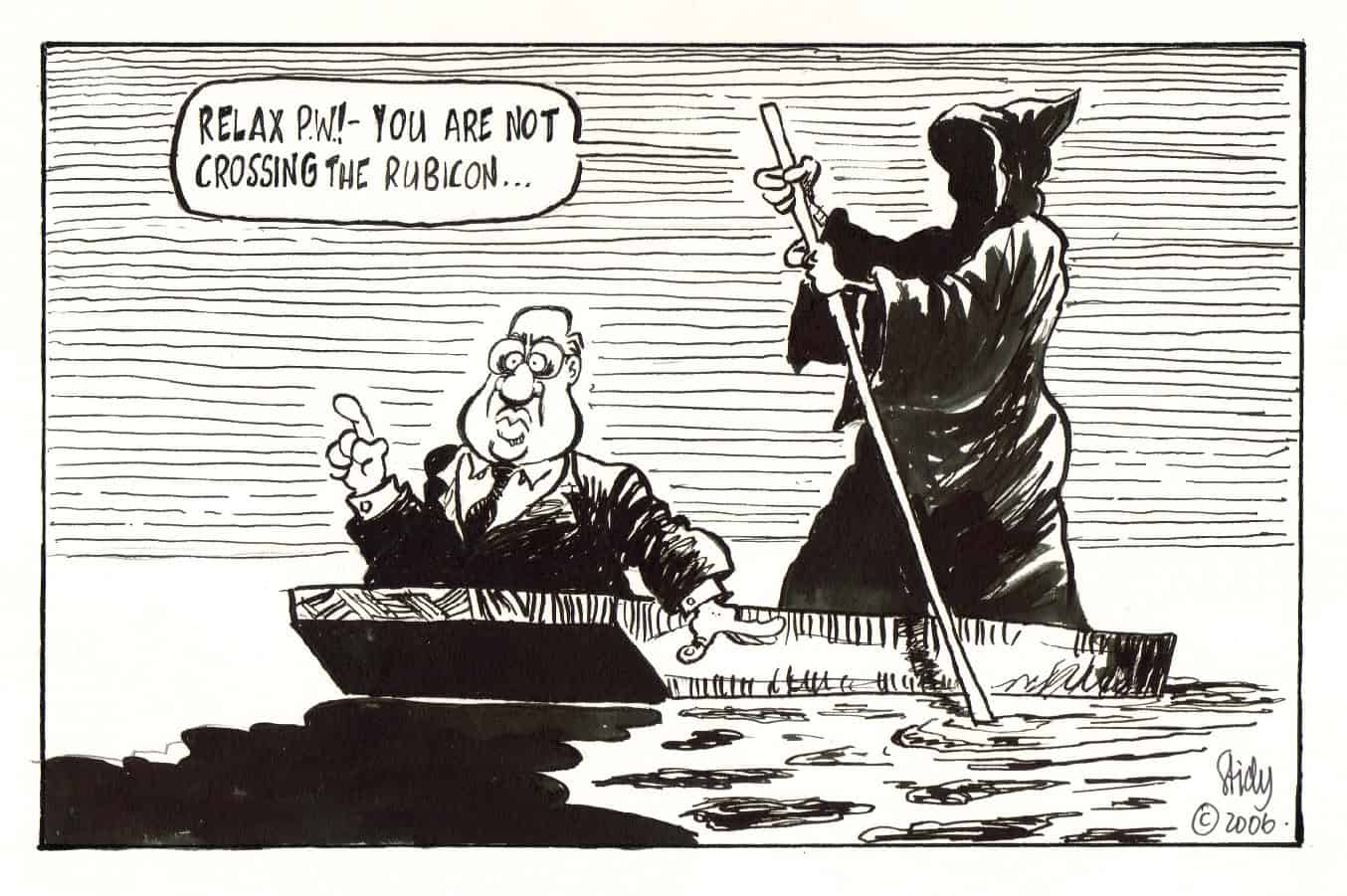
Editorial cartoons often say in one image what a thousand words might struggle to capture. What are the key ingredients that make a cartoon really work?
There are various shortcuts and little tricks you can use to help the reader interpret your cartoon.
Like all cartoonists, I make use of visual metaphors and go scavenging around in search of an appropriate pictorial image to fit the topical comment I wish to make. The classics always provide a good source of material – Shakespeare, Alice in Wonderland, the Bible and so on.
Sometimes you can fall back on those stock political symbols – the American Eagle, the Russian bear, the Chinese dragon, Uncle Sam, John Bull. Alternatively you can transmogrify politicians into animals or turn political parties into malfunctioning machines.
Generally, though, I prefer to avoid the obvious image and try to bring an element of surprise into my work so as to catch the reader wrong-footed and give the cartoon a sharper edge.
Cartoon 8
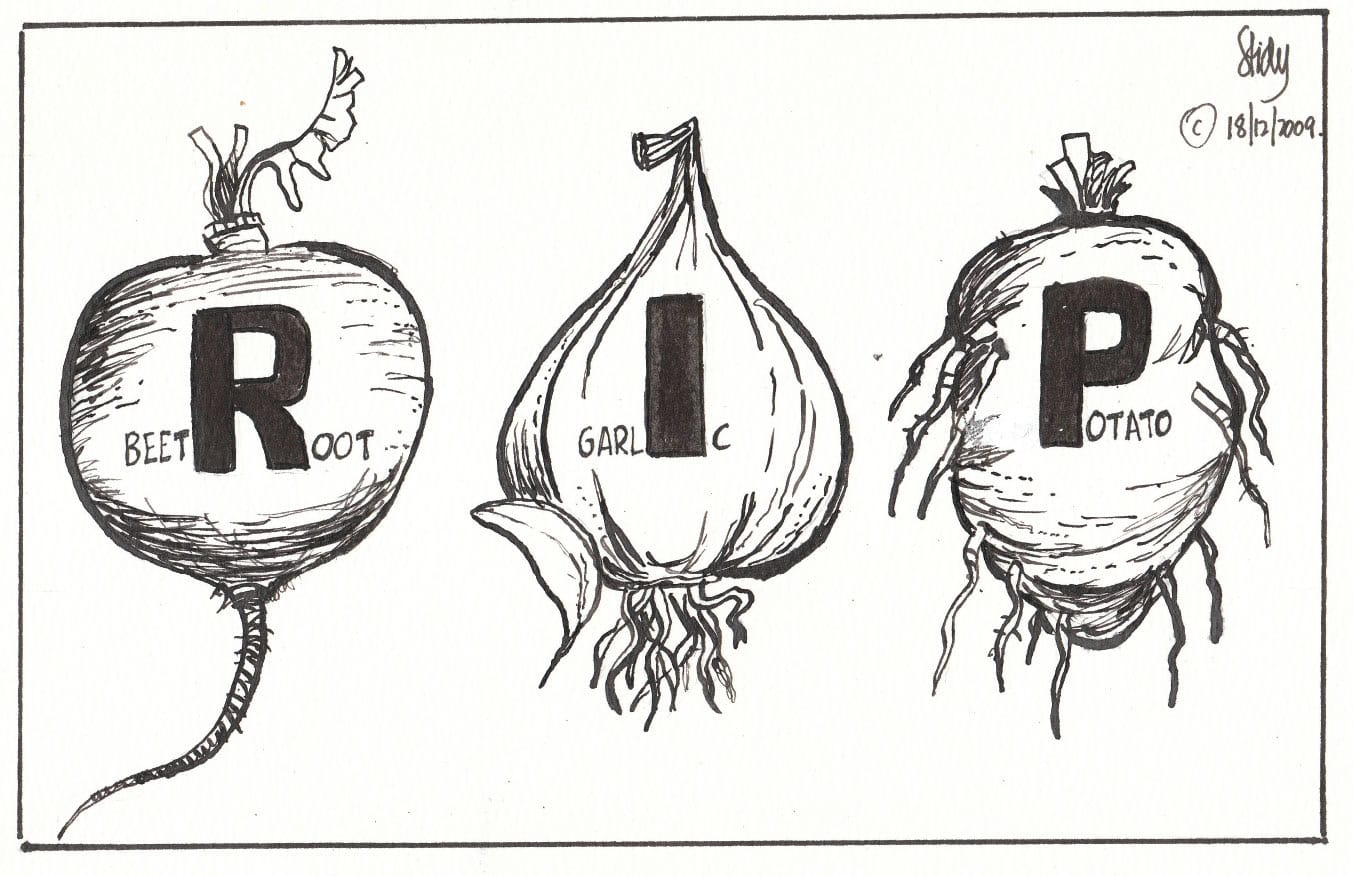
Your recent use of the “gnu” — the wildebeest — as a visual play on South Africa’s Government of National Unity resonated strongly with readers. How do you decide how to depict public figures or recurring themes in a way that instantly resonates with readers?
Like all cartoonists, I go scavenging around in search of an appropriate pictorial image to fit the topical comment I wish to make.
Sometimes you use animals – like the gnu – or sporting metaphors, or turn political parties into malfunctioning machines.
Generally, I prefer to avoid the obvious image and try to bring an element of surprise into my work so as to catch readers wrong-footed.
Cartoon 9
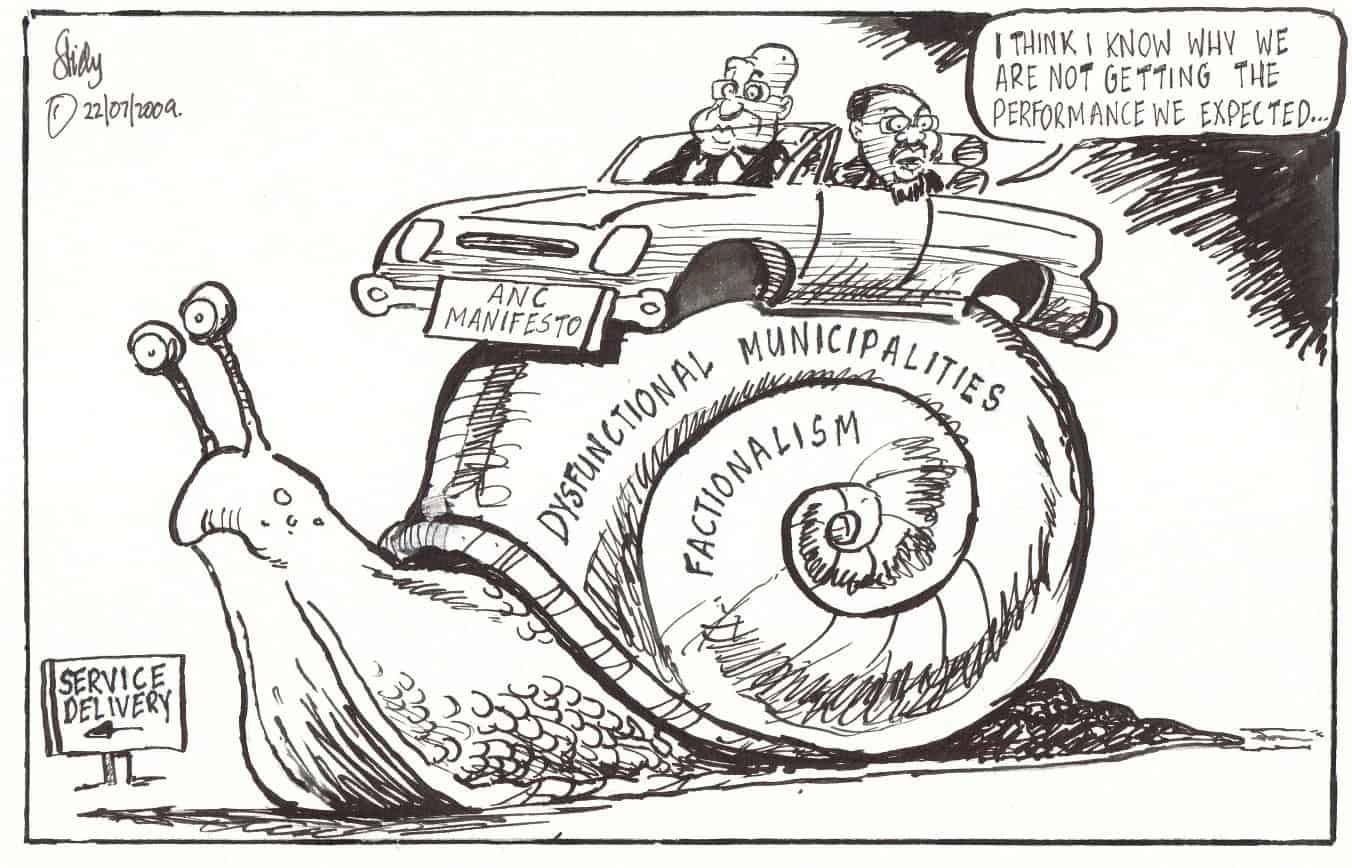
Are there any particular symbols, caricatures or recurring characters that you especially enjoy drawing?
Anything involving animals. It is why I seized on the GNU image with glee.
I especially like drawing crocodiles and elephants.
Don't ask me why.
Cartoon 10
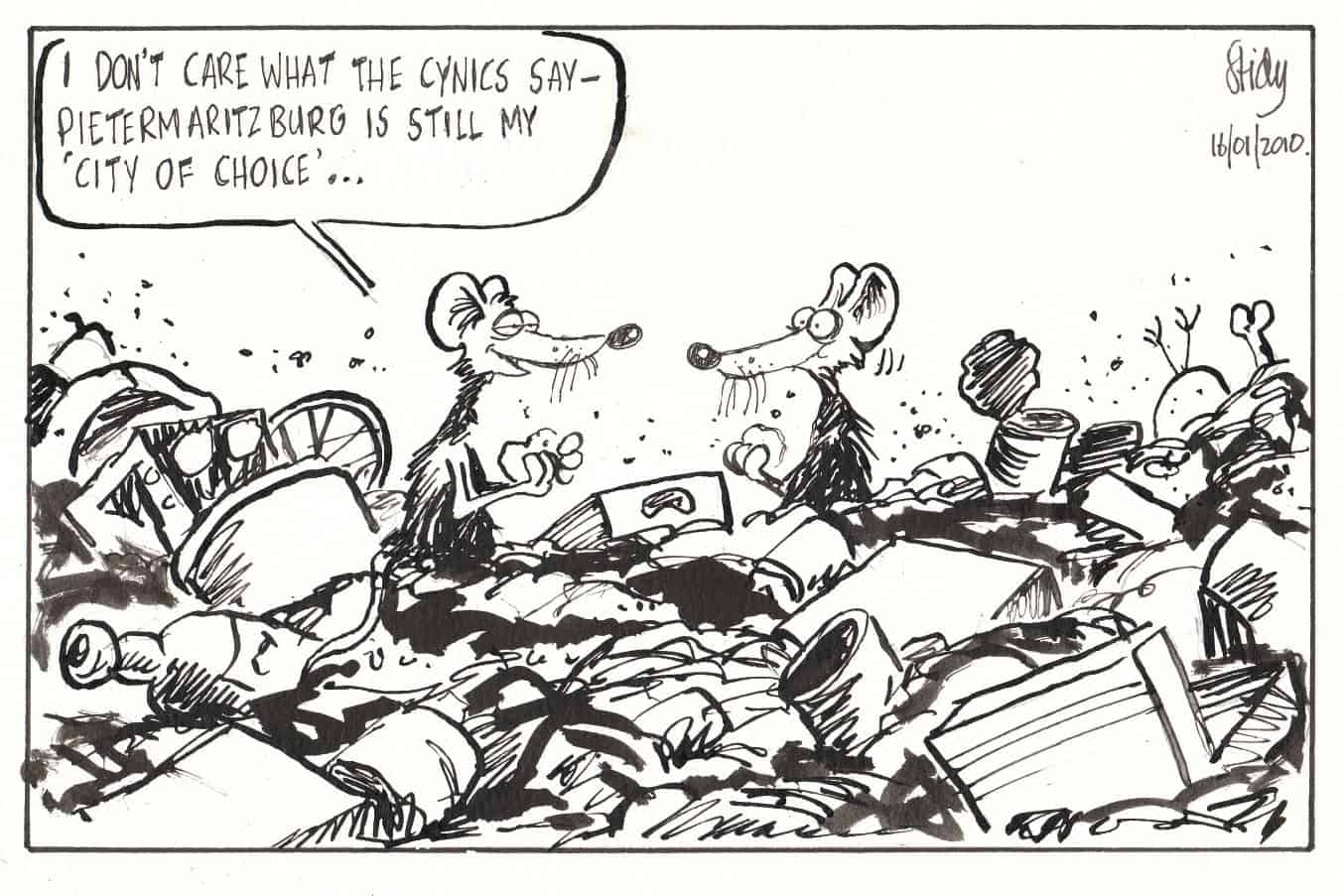
It can’t be an easy task. Finding the right visual metaphor while striking the balance between subtlety and being overt enough for readers to immediately understand the reference — all while avoiding unfair insult or defamation. How do you strike the balance?
I have got off relatively lightly in that respect although I do recall one elderly lady writing in from the Amber Retirement Homes telling me I was “obviously consumed by a deep underlying hatred of humanity”.
That stunned me as I had never seen myself in those unflattering terms.
The IFP founder Chief Mangosuthu Buthelezi was notoriously thin-skinned and often wrote to the Witness complaining about my portrayal of him in cartoons.
I got used to it. It went with the territory.
Cartoon 11
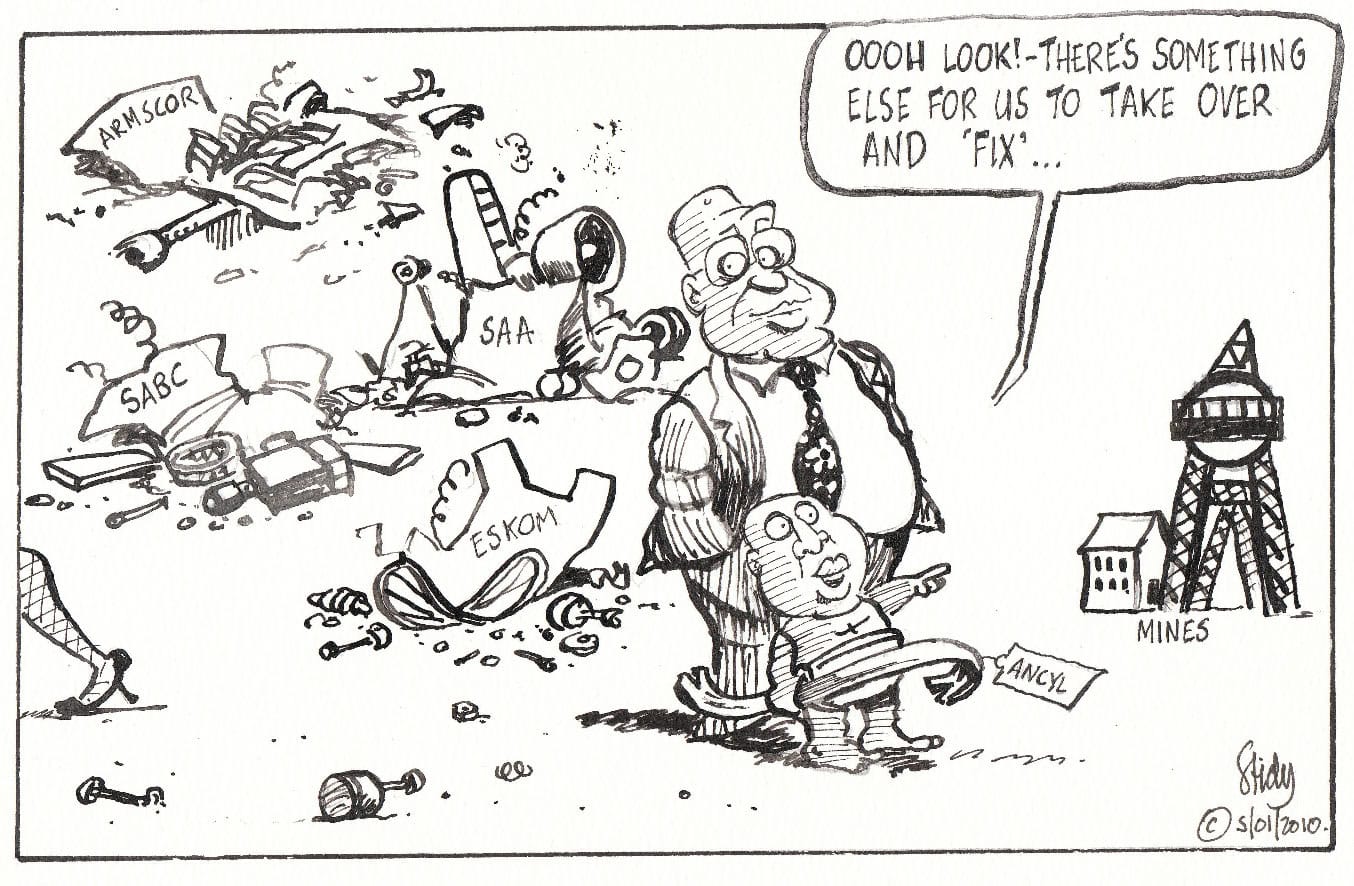
A cartoonist has to distil complex politics into a single frame. How do you interpret the journalist–artist balance?
The political cartoonist occupies a rather strange position in the newsroom.
Surrounded by writers who tend to think verbally rather than visually, he often feels like the poor country cousin.
I have always regarded political cartooning as the bastard child of literature and art. To be good at it you have to be able to both draw and think politically – an unusual combination of qualities.
Cartoon 12
How has the shift from black-and-white newspapers to colour and the digital age changed your art?
I was initially reluctant to use colour because I liked the starkness of black and white and felt it served my satire better.
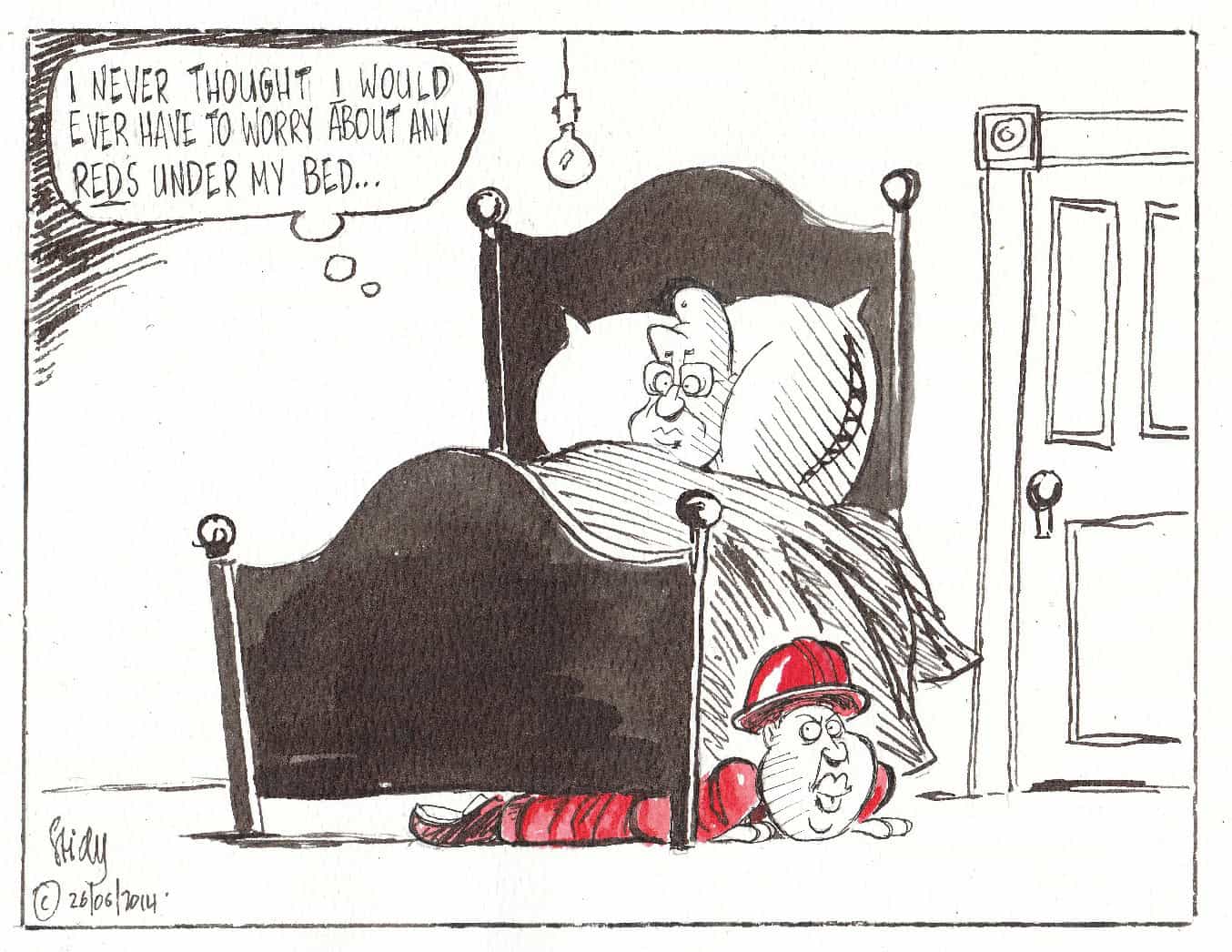
Then I had a rethink and began to add a dash every now and again – I now always do EFF leader Juju Malema in his trademark red – because I realised it gave my cartoons a more dramatic effect.
I haven't graduated to digital yet and I don't think I ever will.
Cartoon 13
Has the way readers respond to cartoons changed over the years?
People are exposed to far more news these days and get their information from a much wider variety of sources.
I am a bit of an iconoclast. I simply draw what is inside me irrespective of what those strange market forces tell you.
It is the only way to be authentic.
Cartoon 14
Looking back, are there cartoons that stand out as capturing a particular historical moment?
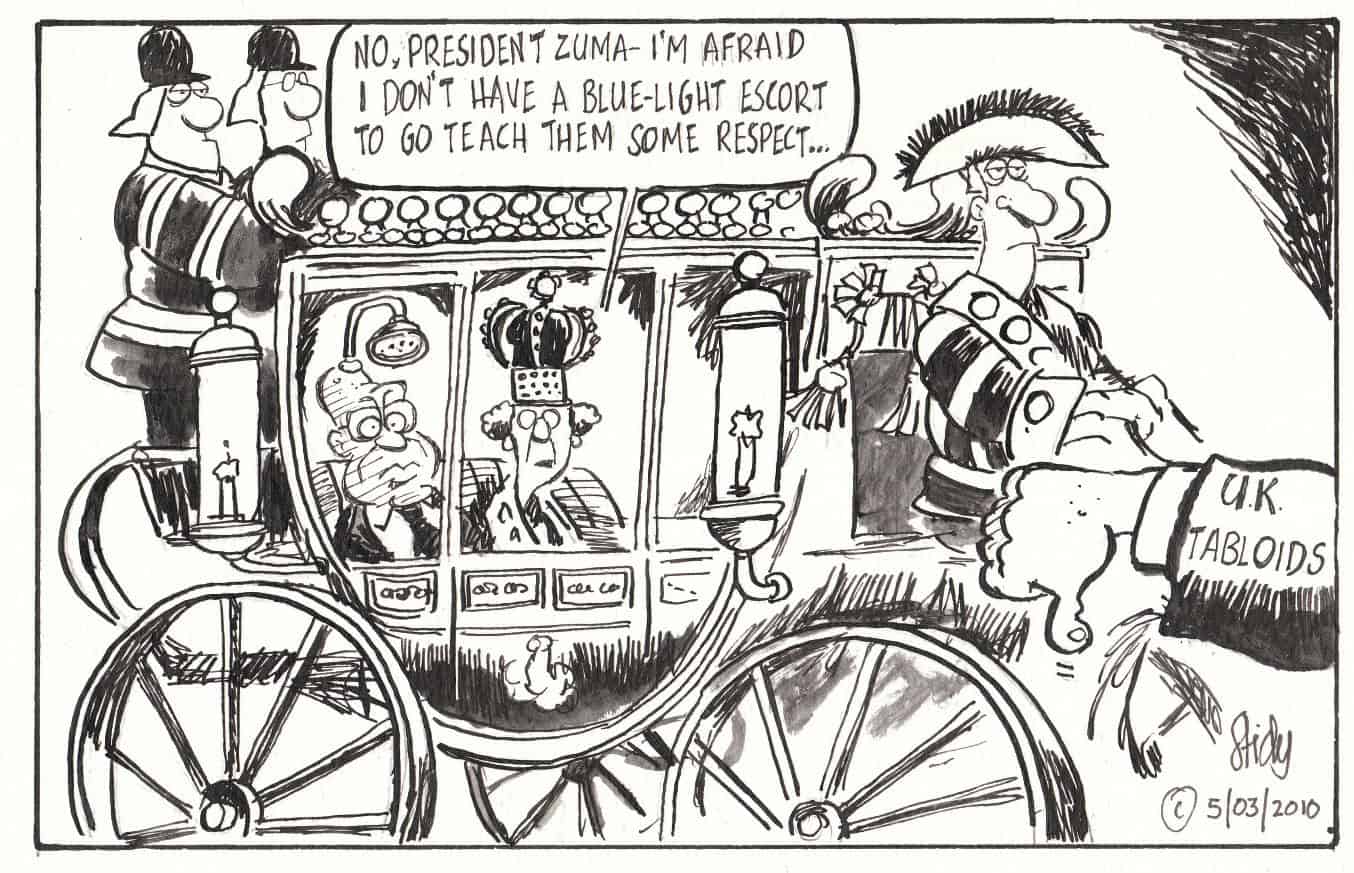
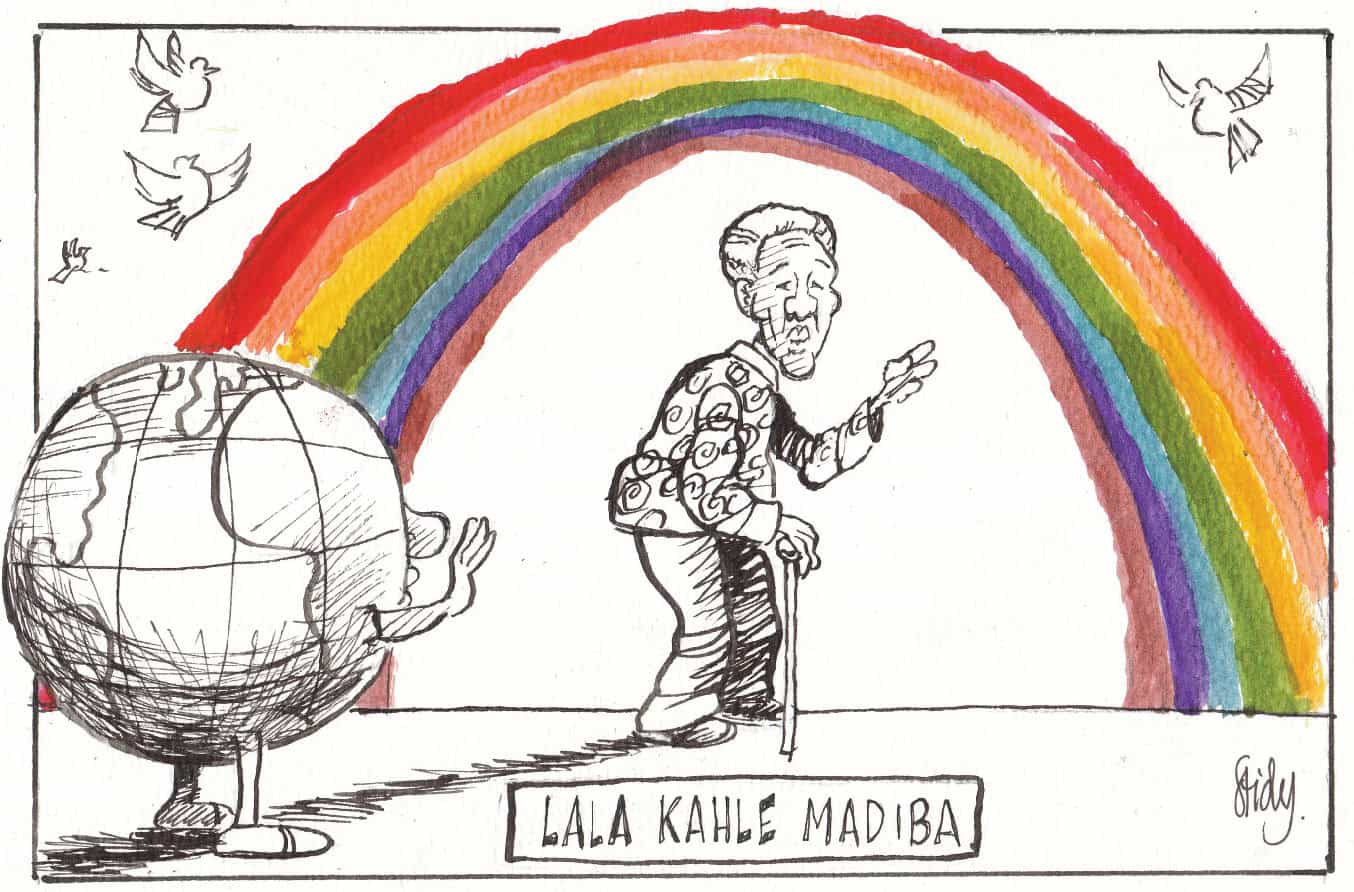
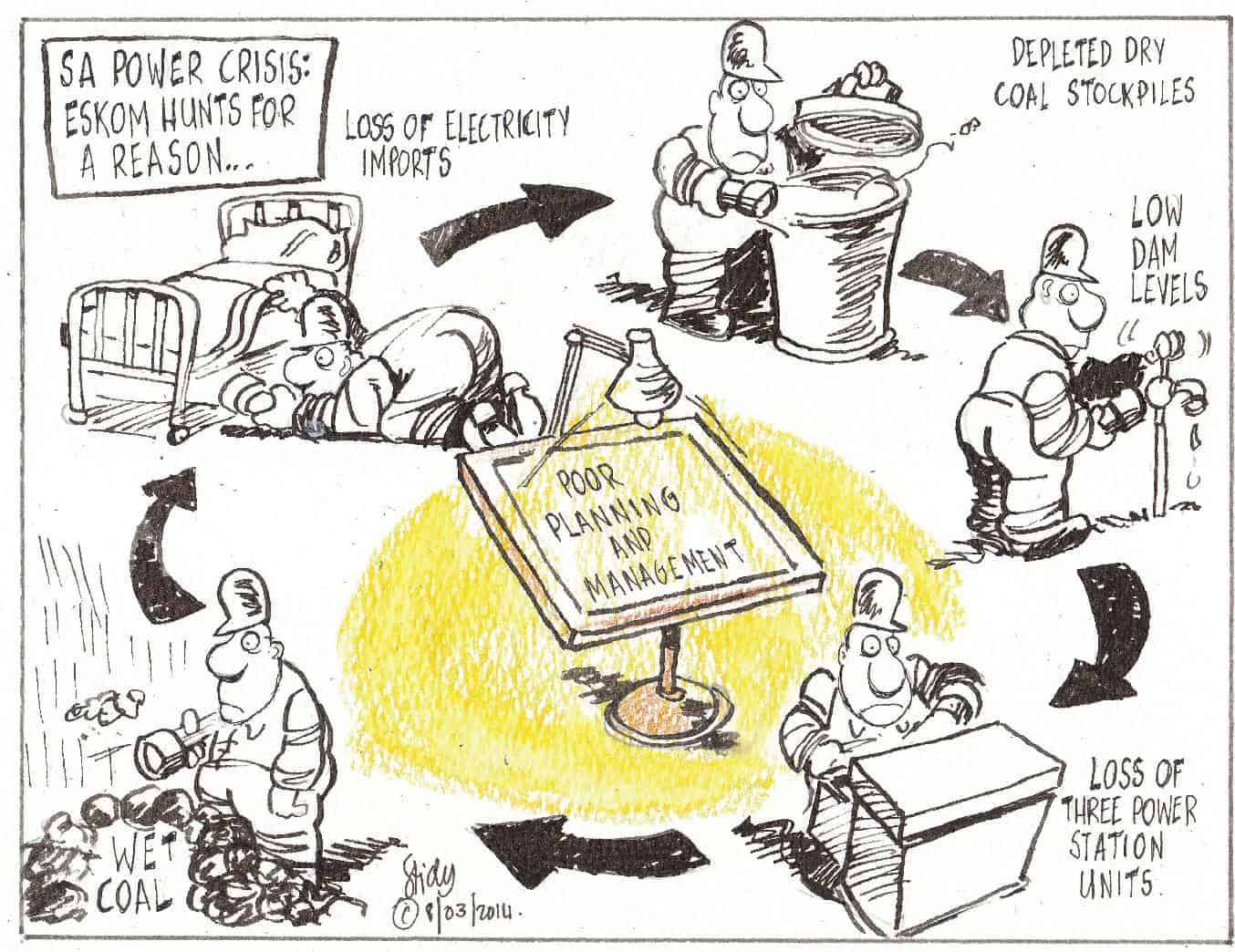
Political cartoons do have an astonishing power to encapsulate an historical moment or popular mood.
The Zuma State Capture years stick out in my mind because of the levels of corruption, malfeasance and sleaze. With his odd-shaped head, Zuma was also a wonderful character to draw.
Donald Trump, too, is a dream subject.
Cartoon 15
Why do you think readers often turn to the cartoon first before reading the rest of the page?
Because it is such a concentrated and cogent form of comment.
It saves you having to read screeds of writing to find out what is going on.
And, hopefully, it is funny.
Cartoon 16
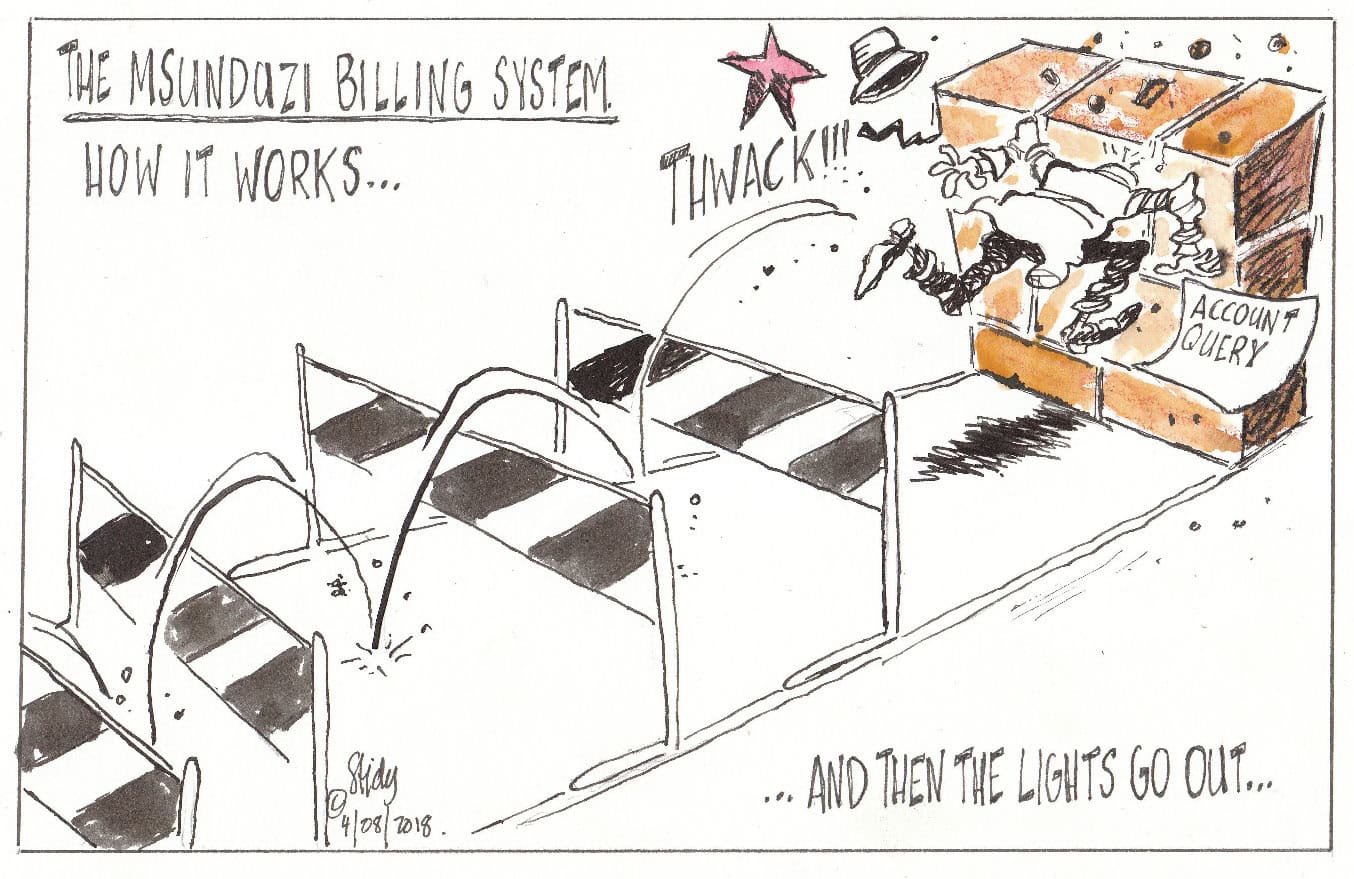
How has the changing newsroom environment affected the craft of cartooning?
I take a certain pride in my Neo-Luddite status.
Early in my career I asked to work from home because I hate distractions when drawing.
Now that I live in the country, my way of working hasn’t changed much – except that I have better birdwatching.
Cartoon 17
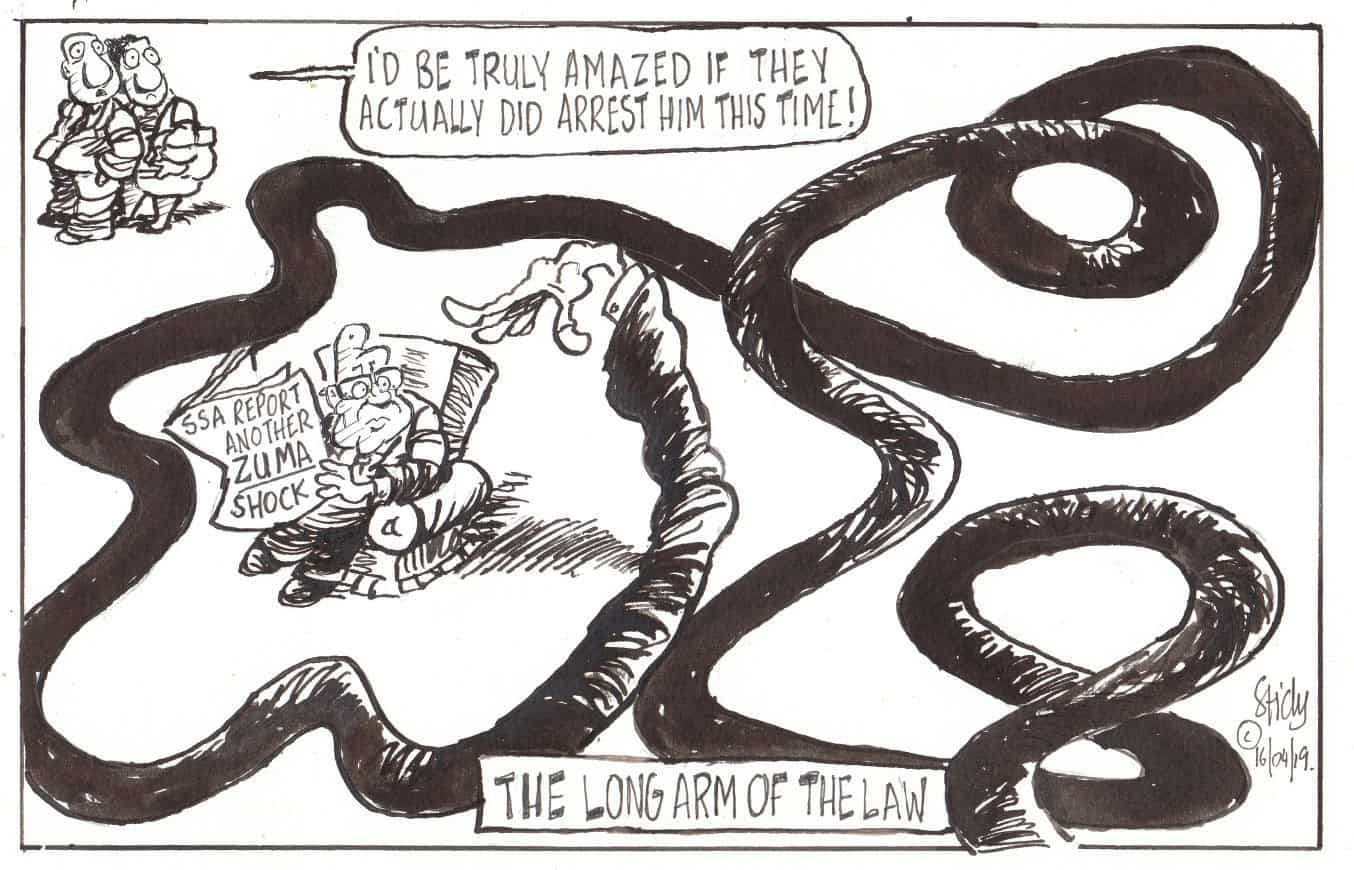
What keeps the craft exciting after all these years?
I am endlessly curious and it takes very little to amuse me.
In this “post-truth” world I feel the art of political satire has never been more needed.
As Orwell famously said: “Every joke is a mini-revolution.”
Cartoon 18
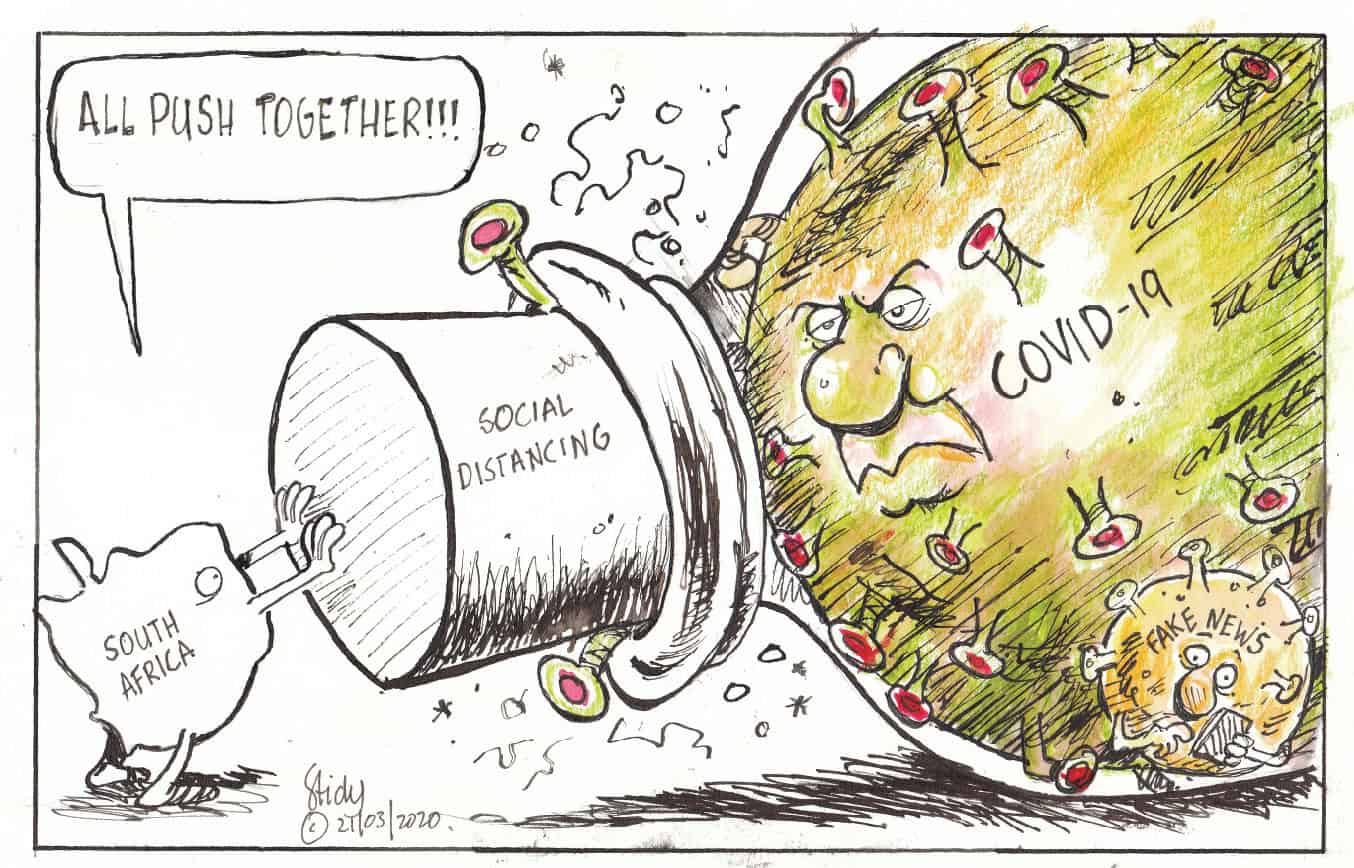
Do you think editorial cartooning is becoming a dying art in the digital era?
With the advent of TV and then the digital age, newspaper cartoons lost some of their influence.
The use of AI to generate images obviously poses a threat to the cartoonist’s livelihood.
One just has to hope that real talent will triumph and that we will not sacrifice our creativity and thinking to a machine.
Cartoon 19
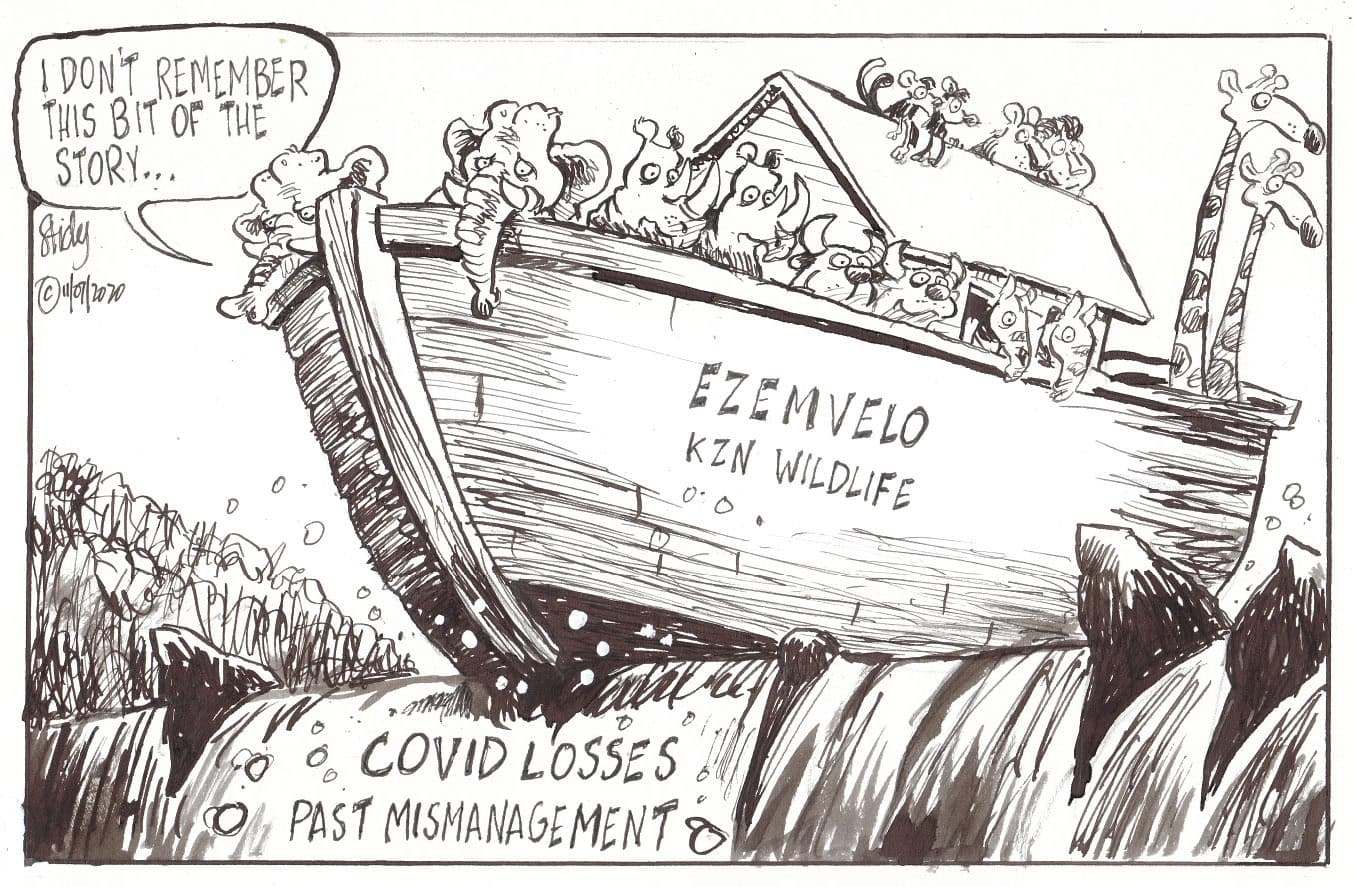
Well, as long as The Witness lives, we will definitely do our bit to keep the craft alive. What advice would you give young artists interested in editorial cartooning?
Study the masters to see how they tackle a subject but develop your own individual style.
It is a constantly evolving process.
Cartoon 20
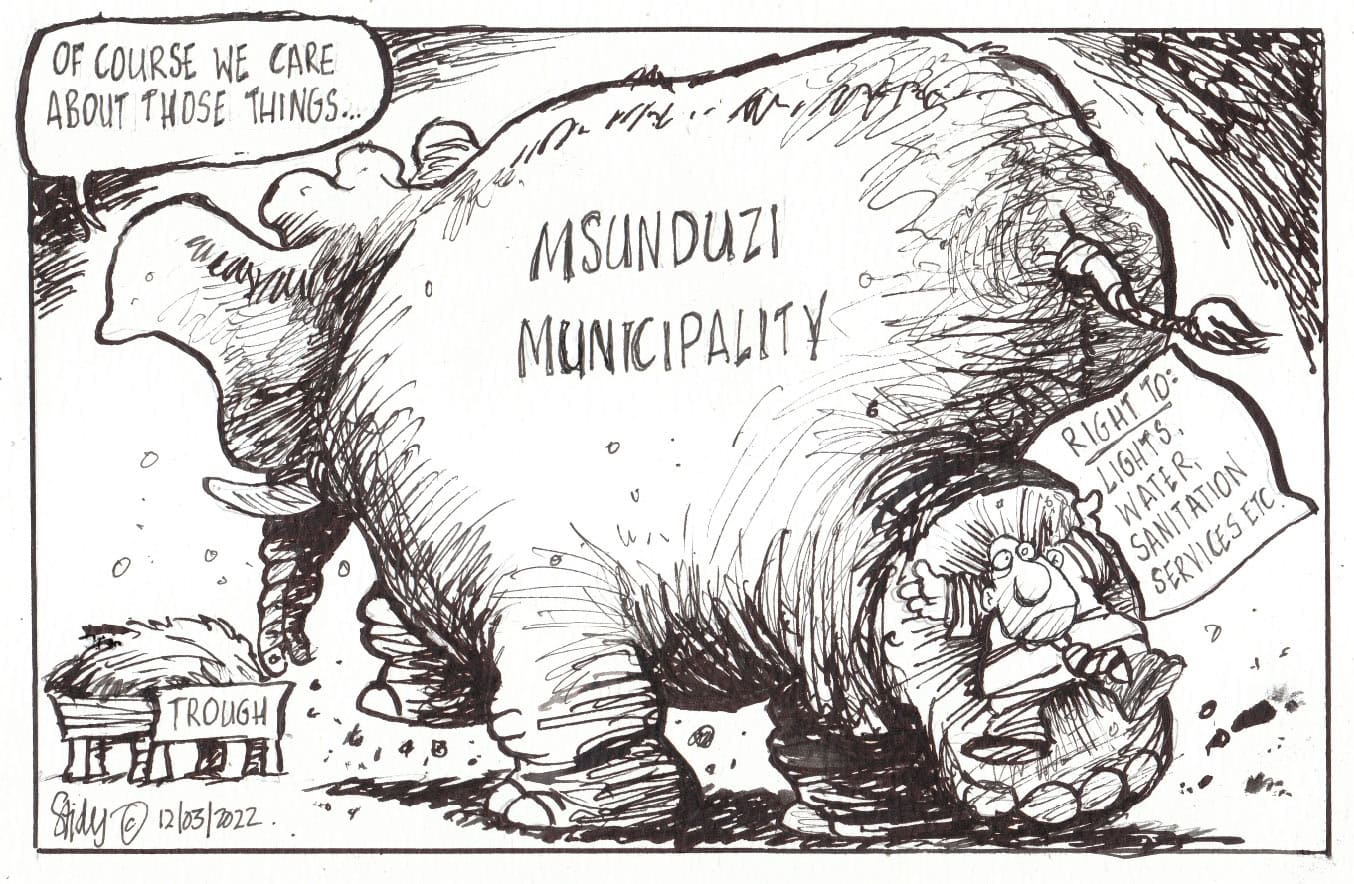
“Stidy” has become synonymous with your work. Has the name become a persona separate from Anthony Stidolph?
I take a certain pride in my Neo-Luddite status.
I originally chose “Stidy” as my nom-de-guerre because “Stidolph” is a bit of a mouthful and everybody kept mispronouncing it.
The name has rather consumed me. Only my family still call me “Ant”.
Maybe I am two people.
Cartoon 21
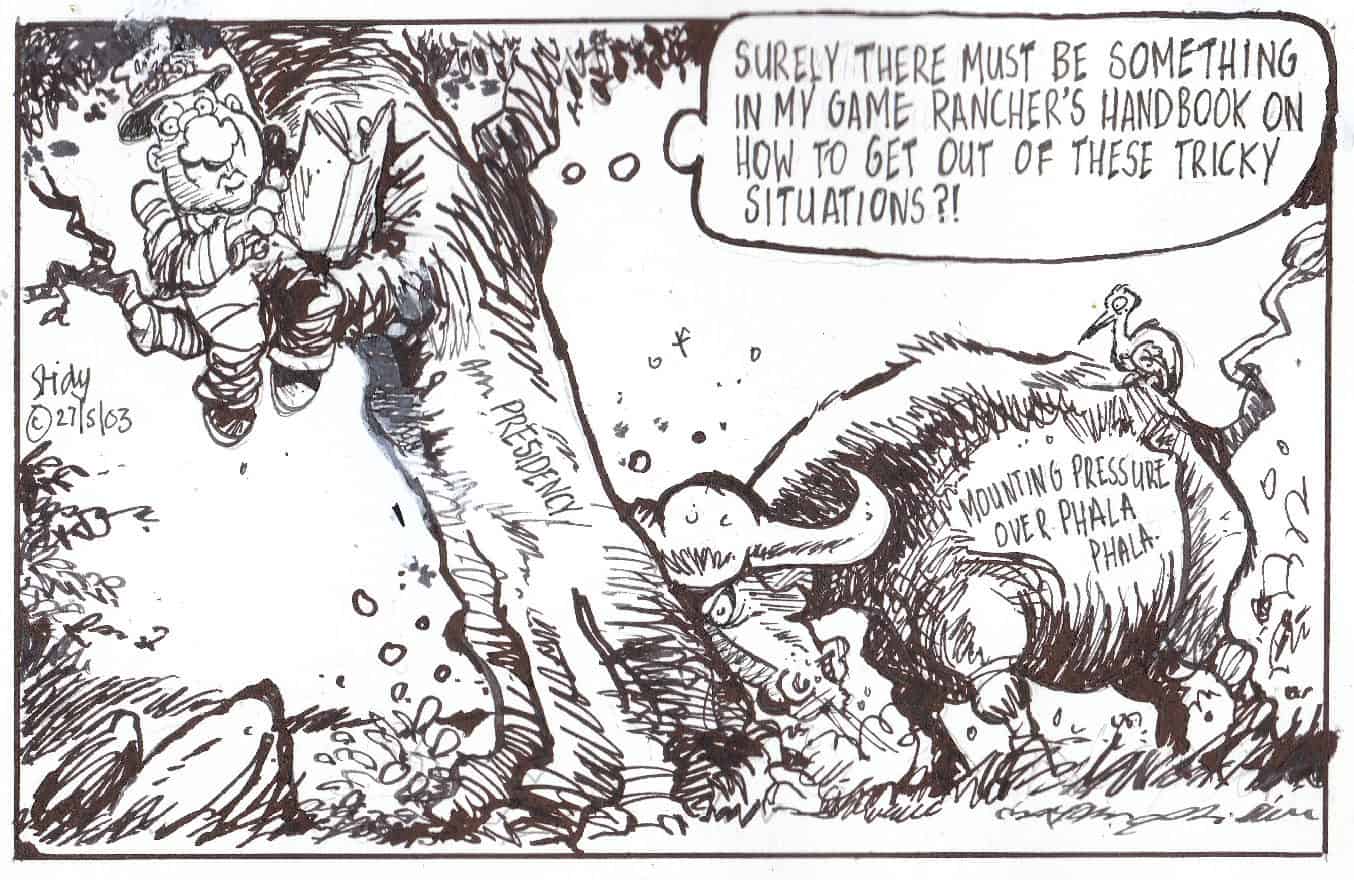
When you’re not drawing cartoons, what occupies your time?
I devote much of my time now to oil painting and birdwatching.
Cartooning is essentially a negative art form – it mocks and deflates the powerful.
Painting, for me, is the opposite. I paint scenes that give me pleasure and joy.
Cartoon 22
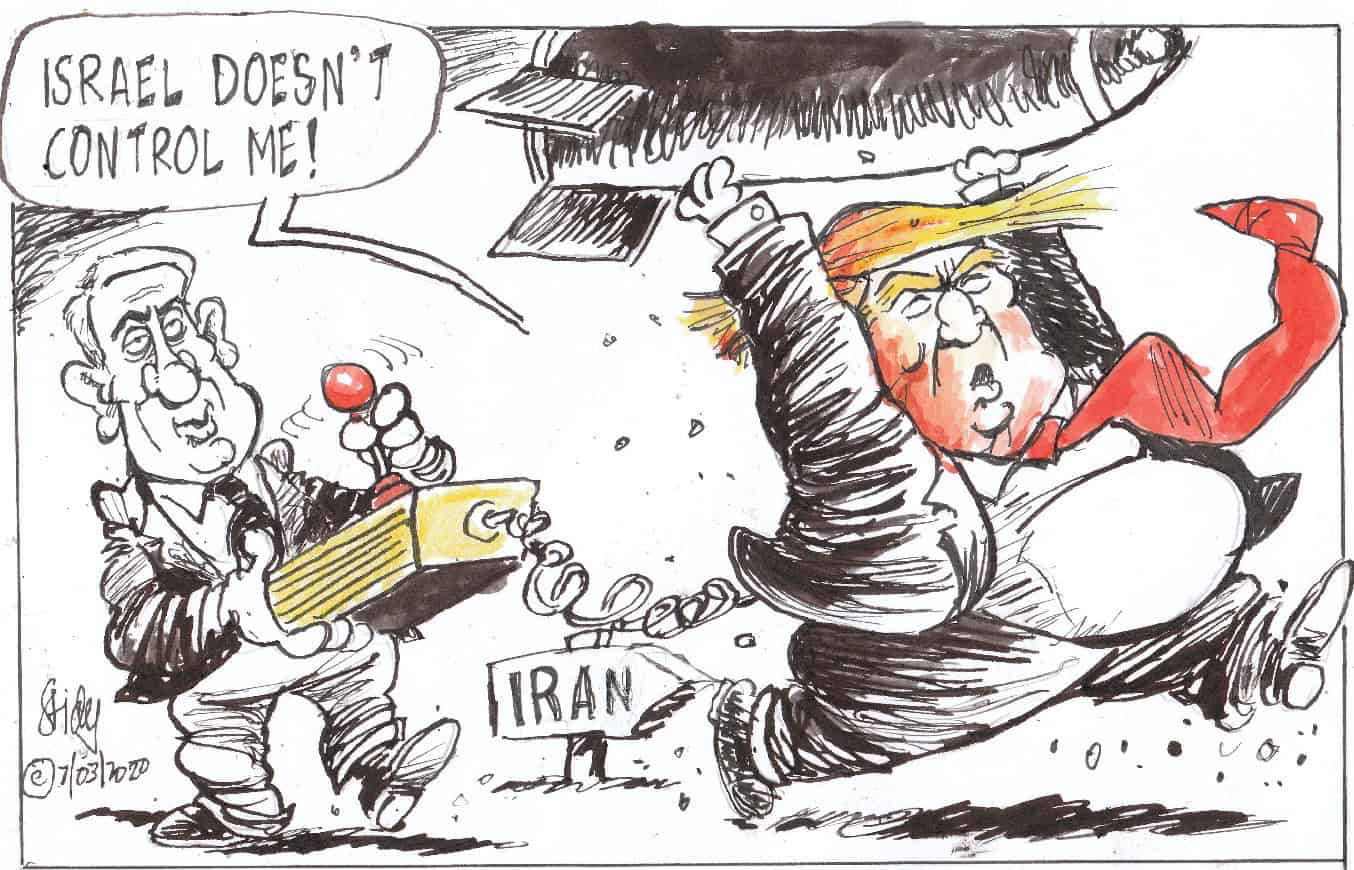
How has the chanAs The Witness celebrates 180 years, how does it feel knowing your cartoons form part of that history?ging newsroom environment affected the craft of cartooning?
I have always regarded it as a huge honour to have been appointed the first full-time cartoonist in the 180-year history of the Witness. I feel privileged to have been on hand to witness the birth of the new South African democracy and chronicle the nation’s sometimes tortuous journey.rdwatching.