
The countdown to the comrades marathon has begun
MEET THE ROC: THE BENT FAMILY
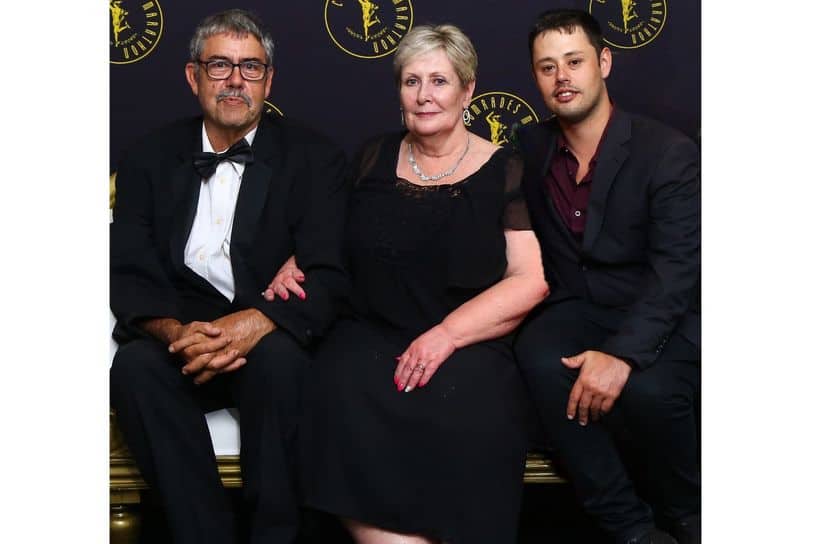
Ask Chris, Marlene and Brad Bent what it is they do as co-ordinators of the Refreshment Stations Portfolio on the Comrades Marathon’s Race Organising Committee, and their collective answer is that’s it difficult to describe in just a few words. That’s because it’s a huge, multi-faceted job, so we sent them some questions to try to get a better idea of the job.
The very nature of the Comrades Marathon means that organising the event is a huge job, especially when it comes to the vital refreshment stations that give the runners sustenance and keep them fuelled to get to the finish. With its 87km to 89km, point-to-point route, the Comrades requires up to 50 refreshment stations located at regular intervals on the route, stocked not just with water and sports drinks, but also food – and the amount of logistical planning that this entails is enormous.
Thankfully for the Comrades Marathon Association (CMA), its Race Organising Committee (ROC) includes an entire family from the Upper Highway area near Durban – Chris and Marlene Bent, joined by their son, Brad – who proudly take on this mammoth job each year. Marlene works full-time as a bookkeeper, while Brad is a commercial and industrial refrigeration technician, and both take leave each year to dedicate a full week to their duties on the ROC alongside Chris, on top of all the time they put into the role throughout the year. It’s truly a labour of love for these Comrades Marathon stalwarts, and a responsibility they accept with both pride and humility each year.
We wanted to know more about the size and scope of what they do, so we posed a few questions to the Bent family. Here’s what they sent back.
Q: When did your involvement with the race begin, and can you describe the different roles you have fulfilled as volunteers, leading up to you heading up the vital refreshment stations portfolio?
A: We first got involved with marshalling at the start in about 2007. Chris started volunteering for the A Team in 2009, to build the finish, and working at the finish on race day. Brad has also helped with the building of the finish venue for a number of years. In 2011, we took over the Refreshment Station Portfolio, and each year, all three of us help with route measuring and route marking as well.
Q: Given how vital the refreshment stations are for ultra-marathon runners, coupled with the length of the point-to-point route and size of the event, can you describe the challenges of this role?
A: With our great team of volunteers, and organisations that perform their duties of manning the refreshment tables on the day with such great enthusiasm and efficiency, all the table captains attend a briefing session prior to race day, where they are informed of their duties and responsibilities, and thankfully, we rarely have any challenges.
Q: Can you describe just how much has to be sent out on the course for race day – both supplies and equipment?
A: Over two million sachets of Thirsti Water, 600 000 sachets of Thirsti Sport energy drink, well over 4 000 cases of Coca-Cola, Fanta and Crème Soda, as well as 600 boxes of bananas, 800 pockets of oranges, two tons of baby potatoes, and 45 000 250ml cartons of Asemzanzi Amahewu.
We also send out over 200kg of energy biscuits, Salticrax and chocolates, and nearly 80 000 sachets of various 32Gi products. Added to that, we also supply the water troughs, 3 000 cardboard bins, 3 500 bin bags, and Arnica Ice, Arnica Spray and Vaseline are also given to each table.
Q: What does your race week and race day look like?
A: We are in the warehouse from the week before race day, receiving all the products that have to be used on race day, and that includes cooking the two tons of baby potatoes at the warehouse. We sort the distribution of the products per table, which then has to be collected by each table. The table sponsors uplift their stock on the Friday and Saturday prior to race day, and with between 45 and 50 tables on route, this is an extremely busy time.
On race day, we have a very early start from about 2am, to drive the route to ensure that all the tables are starting their set up. We check that they are in the correct positions, and that the products are being laid out in the correct order. We are then on the route the entire day to assist with any challenges that may arise, and we are in radio contact with the VOC (Venue Operations Centre) to report any issues, even so far as reporting runners that need medical assistance. After the race we have to assist with the clean-up, and we have to ensure that all the Comrades Marathon property is collected from all the refreshment stations and returned to Comrades House. We usually finish at around 10pm, so it’s a very long day.
Q: Has the role of co-ordinating the refreshment stations changed over the years?
A: Even though the race continues to grow, our role remains much the same. However, we have evolved our processes to adapt to the challenges that each year brings, as no two years are the same. The race is evolving every year, so we have to adapt and make changes for the smooth running of the refreshment stations. Every year we strive to improve on the previous year.